• How to Setup a Top Loading Bobbin

    "Before buying a sewing machine, of course, you will focus on finding various information about the advantages and disadvantages of the sewing machine..

  • How to Create a Safe Crib

    What should be grateful for, the presence of the baby in the family makes the atmosphere .

  • Sew a Fabric Tab End on a Zipper!

    Slice a piece of textile that measures 1 3/4 " (4. 5cm) N x 4" (10cm) They would. Press 1/4 " (6mm) to an incorrect side on both short ends of the fabric piece.

  • Sewing Machine Needles

    Learn how to recognize the many types of standard, decorative, and special-purpose machine needles. Discover what they are all best for, and how to troubleshoot problems

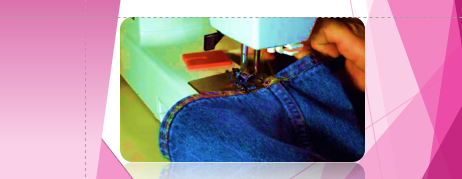
  • Tips Sewing Denim

    Denim is one of the most popular fabrics and this fabric is very synonymous with jeans..

How To make Face Mask Holders

The use of masks is now almost a primary need for everyone during the Covid-19 pandemic, but this need is not compared to the production of available masks, making the function of wearing masks a new problem for the wearer. One of them is an earlop mask.


Where the function of this earlop mask is very easy to use by men who do not wear the hijab, but it will be an obstacle for women who use it because it is a little complicated to use inside the hijab.


Headlop masks are easier to use for women who wear hijab. However, sometimes the production stock decreases or runs out, so it requires the creativity of tailors to solve this problem.

Now in this tutorial I will share an easy way to make a mask connector to change the function of an earlop mask to a headlop. Very easy way and all tailors can make it. and those who don't have a sewing machine can also use a hand needle to make it.

The basic ingredients for making this mask connector :

1. Clothing decorative accessories colored cotton ribbons or other ribbons

2. Shirt Button

3. Foot Button

4. Sewings


Easy ways to sew this Mask Connector are as follows:

a. Cut the Ribbon 22 cm in length ... this size is adjustable

b. Sew using a sewing machine that has been replaced with a foot button

and make sure to adjust the length and zigzag motif according to the button


c. Make sure the stitched thread is completely repeated so that the tension of the thread does not come off easily.


Share:

How to Make a Hot Glue Gun at Home

Hot glue is one of the work support devices in the sewing process. This tool is also widely used in everyday life, especially by craftsmen. This type of glue is very important and useful at a fairly cheap price to buy it. As a type of glue for crafts, it is very important before buying is to choose the type and brand as needed.


Using hot glue gun may seem simple at first, but it requires a process of care and attention to ensure the safety of making glue gun, especially if you are around children.

There are several things that need to be considered in using this hot glue, including the following:

1. Check the tension characteristics of the glue gun used,

2. Determine the type of glue gun you want to use, because one uses the thickest glue stick and another uses a thinner glue stick.

3. Be careful when handling the glue gun to avoid burns.

4. Clean the funnel, attach it to the mains voltage, attach the glue stick, wait for the glue to heat up then pull the trigger to use it

5. The heating time of this glue is about 5 minutes.

Share:

Step by step Making a Hijab Mask

Hijab masks are masks that are in trend for hijab lovers. In addition to functioning as personal protection from the Corona virus, this type of hijab mask is very fashionable when combined with floral fabrics.

Hijab Mask

This model attracts many people not only because of its efficiency when used over the hijab, its different style from earlop masks makes it more comfortable for users to use it. The production of this hijab cloth mask has turned out to be a great opportunity to make money for many people. With a time of about half an hour, 1 mask, maybe for beginners, it will eliminate their boredom in sewing a mask of this type.

In addition, the production of the hijab masks that we make can also be used back and forth as desired, with a combination of two different color motifs that make users prefer according to the color motif of the clothes used.

I created a hijab mask template to help you create one. apart from to protect yourself, you can also make this hijab mask for the whole family. 


If you want to have it please wa me in the following admin number : 081290714337

and if you want to sew it yourself, I will also give the pattern later via whatapps account

Share:

Tips for Sewing Denim 2019


Sewing Denim 

Denim is one of the most popular fabrics and this fabric is very synonymous with jeans. It takes a little trick to make this fabric more professional and its tidiness more clear.


The term "jeans" currently usually refers to the style of certain pants, called Blue Jeans. The contemporary use of the word "jeans" actually comes from the French word for Genoa, Italy (GĂȘnes) because sailors from this city are known to wear these cotton pants. Jeans are also often referred to as dungaree which means coarse cloth and is one of the few Hindi words.

Characteristics of denim


The characteristics of Denim fabric are very strong and durable. Anyone who has jeans must have known the character of this fabric.
The longer the more soft is one of the characteristics of this fabric. But in washing, we have to separate with other fabric. This is so that other fabrics do not mix with the characteristics of the color of the denim fabric.

Denim is also one of the most durable fabrics on the market.
If you need to adjust your denim or tear, you must arm yourself with high-quality threads and very sharp and strong needles. Ordinary threads and needles will not work with this strong cloth.

If you sew your own jeans from a memo, make sure you have the right tools for the job:
1. Use strong needles so that they don't break easily, whether they are made specifically for sewing denim such as the Schmetz Denim Needle, or universal needles that are at least 90/14. If denim is very thick, make it 100/16. These needles will have reinforced blades to minimize needle deflection and reduce the risk of broken needles or stitches being passed.
3. Use heavy-duty Jeans Thread, especially for topstitching associated with flat logging or if you can't find this, you can also try to stretch upholstery.
3. Use a sharp tool. This includes both using sharp professional sewing scissors and sharp rotary cutters.
Share:

Sewing-Machine Needles

Sewing-Machine Needles


Learn how to recognize the many types of standard, decorative, and special-purpose machine needles. Discover what they are all best for, and how to troubleshoot problems.

The configuration of these needles is established on this fabric to be sewn.


Universal as an example
Uses: Safest needle choice for most fabrics.
Setup: Has slightly rounded point and elongated scarf to permit almost foolproof appointment of needle and bobbin hook.
Troubleshooting: When textile is not medium-weight unique, consider needle specifically best suited to fabric. For example, size 18 universal hook ideal for heavy jeans, but size 18 denim jeans needle works more effectively.

Ballpoint and stretch needles
Uses: Ballpoint needle for heavier, looser sweater knits; stretch needle for highly elastic fabrics, like
Spandex, or Lycra.
Configuration: Possess rounded points that enter between fabric threads somewhat than pierce them. (Stretch-needle point is slightly less rounded than ballpoint. )
Troubleshooting: Test-stitch knits with ballpoint, stretch, and common needles to see which doesn't cut yarn and yields best results. In the event ballpoint skips stitches, try stretch needle.

Microtex and sharp needles
Uses: Stitches microfiber, silk, synthetic leather; precisely stitching edges; and heirloom sewing.
Configuration: Posseses an acute point.
Troubleshooting: Essentially trouble-free, but fabric might require a Teflon, roller, or even/dual-feed presser foot.

Natural leather needle
Uses: Excellent for sewing natural leather.
Setup: Has slight cutting point (almost like an arrowhead).
Troubleshooting: On synthetic leather, unless it is rather heavy simplicity of, cuts rather than pierces stitch hole and can tear leather. Most man-made leathers require Microtex or sharp needle.

Denim (jeans) needle
Uses: For top quality denim, duck, canvas, covers fabrics, artificial leather, and vinyl.
Configuration: Has much deeper scarf, acute point, and modified shaft to affix without pushing fabric down into needle-plate hole. Moves through fabric and complies with bobbin hook better on dense woven fabrics.
Servicing: If stitches skip when sewing very heavy fabric, try larger needle and sew more slowly or walk needle through textile (by turning hand crank).

Handicap/self-threading needle
Uses: Permits easier threading for sewers with vision problems.
Construction: Universal needle with slip-in threading slot at the eye.
Troubleshooting: Always take sewn piece back away from needle before trimming thread so needle does not unthread. Needle is useful on woven fabrics, but may occasionally snag knits, so test-sew to check for fabric and needle abiliyy.

Standard needles

Decorative needles

The configuration is designed to wed thread to fabric for surface decoration.

Topstitching hook
Uses: Topstitching.
Configuration: Has extra-acute point, extra-large eye, and large groove for heavy line.
Troubleshooting: Use smallest size needle that accommodates your thread to avoid striking large holes in textile.

Embroidery needle
Uses: Equipment embroidering or embellishing with decorative thread.
Configuration: Features light point (neither sharpened nor ballpoint) and enflamed eye to keep ornamental threads from shredding or breaking, and prevent missed out stitches.
Troubleshooting: If bond still shreds on compacted or heavily stitched design, use larger size as an example or Metallica needle.

Material (Metafil and Metallica) hook
Uses: Sewing with attractive metallic threads.
Configuration: Offers universal or standard point; large, elongated eye; and enormous groove to allow fragile metallic and man-made filament threads to movement smoothly.
Troubleshooting: Metallic strings are incredibly sensitive to problems in machine: Tiniest burr on thread path or needle can cause problems.


Quilting (stippling) hookUses: Piecing, quilting, and stippling.
Configuration: Has special pointed shaft to prevent harming fabrics when stitching multiple layers.
Troubleshooting: Move cloth smoothly without pulling on needle when free-motion sewing to prevent breaking filling device.
Share:

Beginner Needlepoint Basics to Get You Started

Needlepoint Basics

Needlepoint is worked one knit at a time on even-weave canvas and is not hard to learn. If you are new to needlepoint, here are nine basic things need to know to get started with your first project.
In simply a few hours you will be creating easy needlepoint pieces you'll be proud to display or wear.


Discover textured fabric and novelty needlepoint yarns to use in highlighting a specific area of a needlepoint design.


Commence with the basics like canvas, tapestry needles, wool and thread; and then as you gain more experience working needlepoint jobs, little by little add frames, traction bars and other convenient what to your collection.


Not all yarn or thread is well suited for needlepoint; but there are hundreds of fibers that can be used to sew a needlepoint design. Discover out the best wool and thread types to include in working a beginner needlepoint project.


Needlepoint requires a blunt suggestion tapestry needle for sewing. These needles come in many different sizes.

Get tips on the right size needed to work your job as well as4 different ways to easily and properly thread the as an example to make your needlepoint stitches look smooth and even.

Needlepoint requires only a few basic inexpensive tools. Check out these tricks for MUST HAVE and WISH LIST items every needlepointer should keep on hand.
Share:

Sew a Fabric Tab End on a Zipper!

Sew a Fabric


Slice a piece of textile that measures 1 3/4 " (4. 5cm) N x 4" (10cm) They would. Press 1/4 " (6mm) to an incorrect side on both short ends of the fabric piece. *Note: the width cutting dimension is if you are utilizing a 1" (2. 5cm) wide zipper. Adjust your width measurement to suit the width of the zipper that you are using. You may also adapt the height or length you cut if you need a longer or not as long zipper tab too.


Then fold the part right-sides-together with the press edges at the top and sew a 0.25 " (6mm) seam on the 2 sides. The top is open and the bottom is where the fold is. I actually used yellow thread in the picture so you could see where you can sew, but you would want to match your carefully thread color to the cloth color when you affix your tab.


Subsequent trim off the four corners at an position and turn your part right-sides-out. Gently poke out the corners so they may be nice and square.


Provide a good press.  anda then Slip your freezer end into the little zipper tab.


Then simply you will top-stitch around all four sides about 1/8" (3mm) from the advantage. Now you have a nice zipper end to grab on to when you are zipping your zipper closed.
Share:

Popular Posts

Powered by Blogger.

Recent Posts